

How to Find a Fitness Trainer Who Fits Your Goals
Why finding the right fitness trainer matters
Choosing a fitness trainer can be one of the smartest investments you make in your health. The right trainer does more than count reps or build workouts. They help you stay consistent, teach proper technique, and create a plan that matches your goals, schedule, and fitness level. Whether you want to lose weight, build strength, improve mobility, or prepare for an event, a qualified trainer can make the process more effective and less overwhelming.
At the same time, not every trainer is the right fit for every person. A great experience depends on compatibility, communication, and professionalism. Taking a little time to evaluate your options can save you money and help you get better results.
Start with your goals
Be specific about what you want
Before you begin searching, get clear on your goals. Are you trying to lose fat, gain muscle, recover from an injury, improve athletic performance, or simply build a healthier routine? Different trainers may specialize in different areas, and knowing your priorities helps narrow the field quickly.
It also helps to think about your preferred training style. Some people thrive with high-energy sessions and lots of accountability, while others prefer a calm, instructional approach. Knowing what motivates you will help you find someone whose style keeps you engaged.
Look for proper qualifications
Check certifications and education
A reputable fitness trainer should have recognized certifications from respected organizations. These credentials show that the trainer understands exercise science, safety, and program design. While certification alone does not guarantee quality, it is an important starting point.
You may also want to look for additional education in areas such as corrective exercise, nutrition coaching, strength and conditioning, or working with special populations. If you have a specific condition or limitation, relevant expertise matters even more.
Ask about experience
Experience is just as important as credentials. Ask how long they have been training clients and what kinds of clients they work with most often. A trainer who regularly works with beginners may be ideal if you are just starting out, while someone with athletic performance experience may be better suited for sport-specific goals.
Consider their training style and personality
Find someone you can communicate with
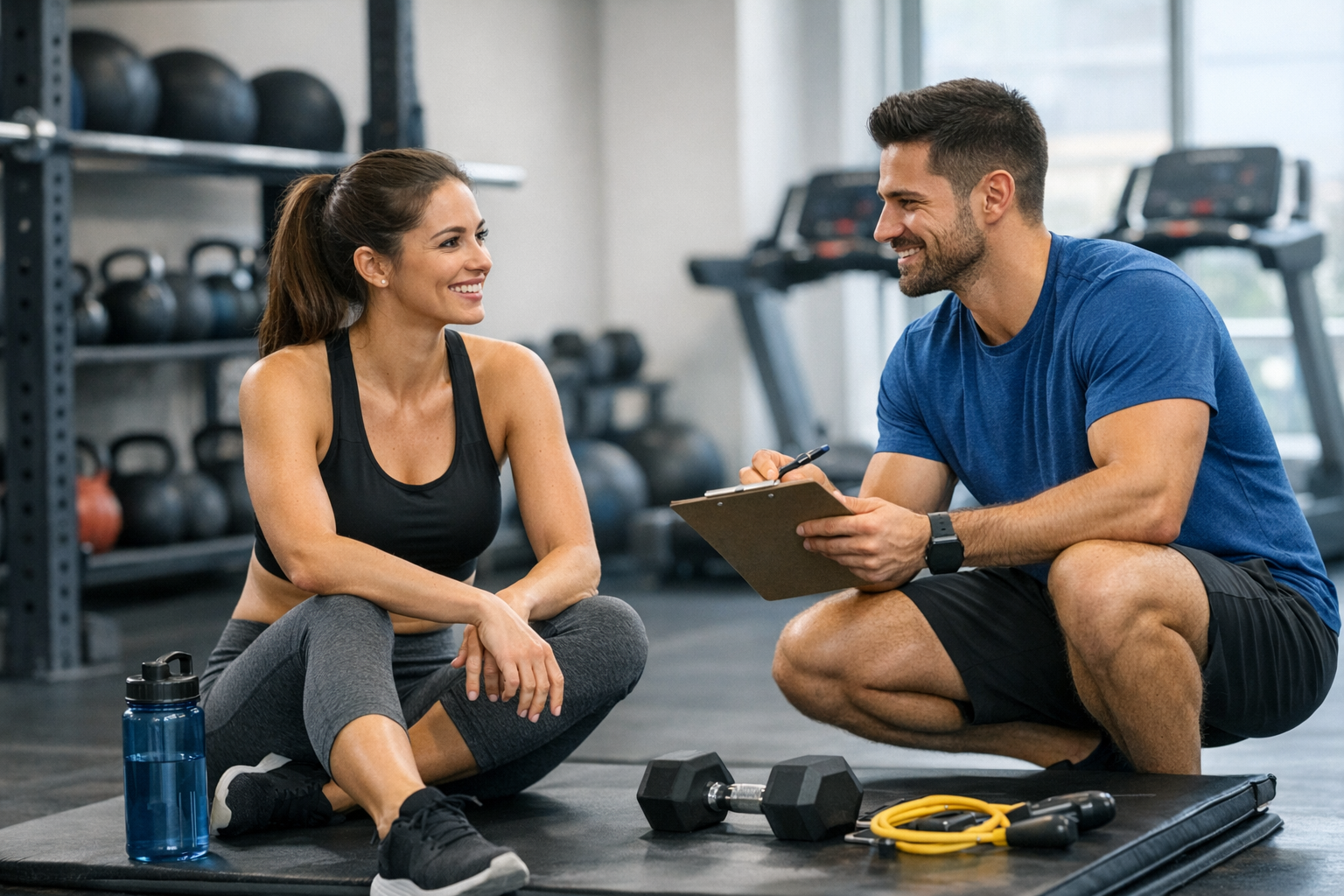
The best trainer for you is not necessarily the one with the flashiest credentials. It is the one you can build a productive relationship with. During an intro call or consultation, pay attention to how they listen. Do they ask thoughtful questions about your goals, habits, injuries, and past experiences? Do they explain things clearly? Good communication is a major indicator of a good training partnership.
Personality fit also matters. If a trainer’s style feels too intense, too passive, or simply not aligned with your preferences, you may have trouble staying consistent. You want someone who motivates you without making you feel judged or ignored.
Choose the right setting
Gym, studio, online, or in-home training
Fitness trainers work in many environments, and the best option depends on your lifestyle. Gym-based training can offer access to more equipment and a structured environment. Studio sessions may feel more private and personalized. Online training can be flexible and affordable, while in-home sessions may be convenient for busy schedules.
Think about what will realistically help you show up consistently. The best program is the one you can stick with over time, so choose a setting that fits your routine and comfort level.
Ask the right questions before hiring
Use the consultation wisely
A consultation is your chance to evaluate whether a trainer is the right choice. Ask questions such as:
- What certifications do you hold?
- What is your experience with clients like me?
- How do you design workout plans?
- How do you track progress?
- What happens if I miss a session?
- Do you offer nutrition guidance or recovery advice?
Also ask how they handle progress plateaus, injuries, and modifications. A strong trainer should be able to adapt workouts and explain the reasoning behind their recommendations.
Discuss expectations and boundaries
It is important to understand pricing, cancellation policies, session length, and communication methods before committing. Ask whether you will receive homework workouts, progress tracking, or check-ins between sessions. Clear expectations prevent confusion later and help you get the most value from your investment.
Read reviews and check references
Look for patterns, not perfection
Online reviews can be helpful, but look for consistent themes instead of focusing on one glowing or negative comment. Repeated praise for professionalism, punctuality, and results is a strong sign. If multiple people mention poor communication or lack of follow-through, that is worth noting.
If possible, ask for references or client success stories. Hearing how the trainer has helped others with similar goals can give you a better sense of what to expect.
Evaluate professionalism and safety
Good trainers prioritize your well-being
A fitness trainer should make safety a priority. They should demonstrate proper form, offer modifications, and avoid pushing you beyond what is appropriate for your ability level. They should also be respectful of your boundaries and sensitive to any injuries, health concerns, or discomfort you mention.
Professionalism goes beyond workouts. Look for someone who is punctual, organized, and prepared for each session. These qualities may seem small, but they often reflect the overall quality of the experience.
Try a session before committing long-term
Test the fit in real time
If possible, book a trial session or short package before committing to a longer plan. One session can reveal a lot about the trainer’s coaching style, attention to detail, and ability to tailor the workout to you.
After the session, ask yourself a few simple questions: Did I feel supported? Did the workout match my goals? Did the trainer listen and adjust when needed? If the answer is yes, you may have found a strong match.
Conclusion
Finding a fitness trainer is about more than credentials alone. The best choice combines expertise, communication, professionalism, and a training style that fits your needs. When you take time to define your goals, ask smart questions, and test the fit, you are far more likely to find someone who helps you stay motivated and make lasting progress.