

Top Gym Equipment: The Best Machines and Tools for a Smarter Workout
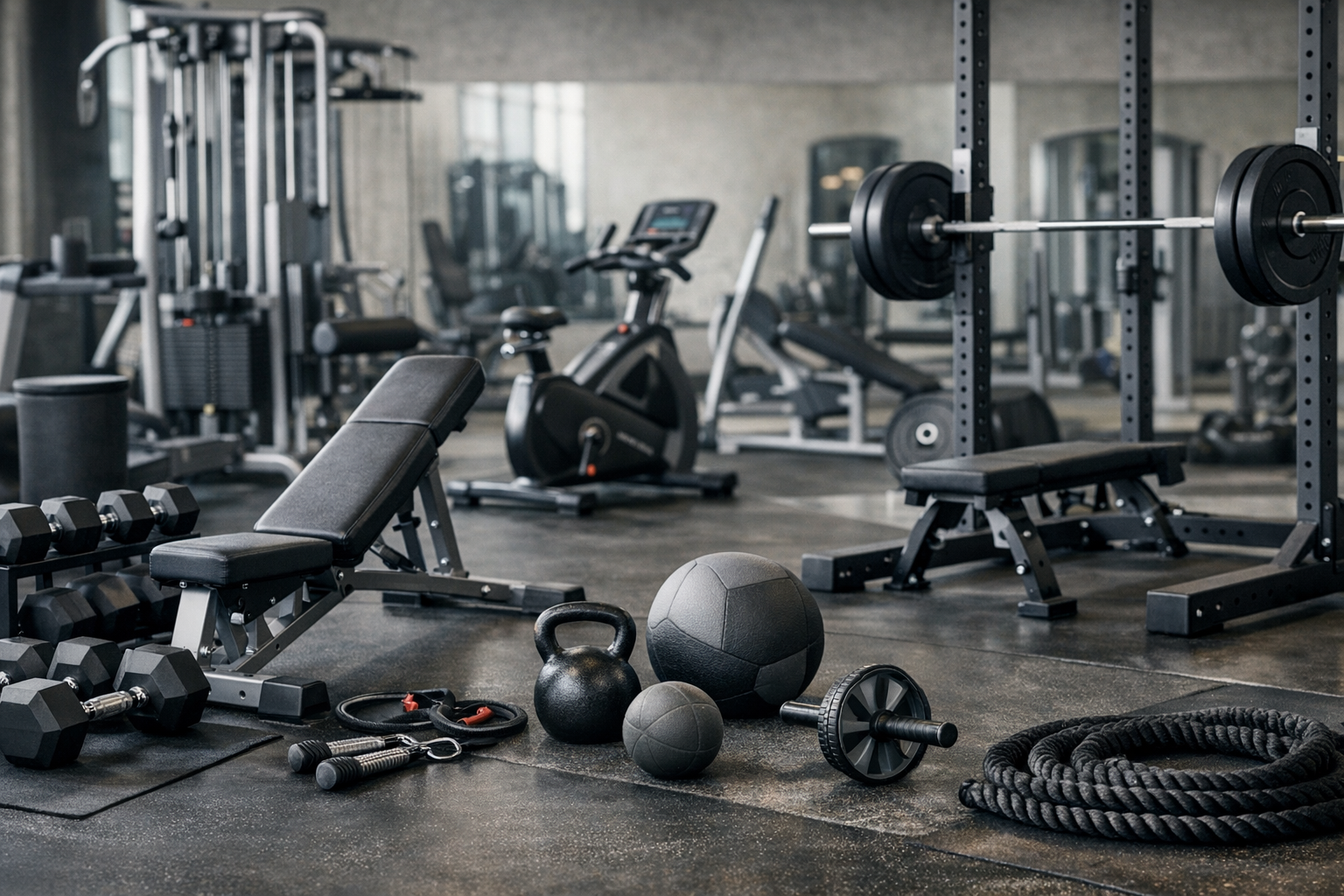
Top Gym Equipment for a Better Workout
Building an effective gym routine starts with choosing the right equipment. Whether you’re setting up a home gym or planning your next fitness upgrade, the best gym equipment supports strength, cardio, mobility, and recovery. The right tools can help you train more efficiently, stay motivated, and reduce the risk of injury.
Below, we’ll look at the top gym equipment every fitness space should consider, along with what each item does best and why it deserves a place in your routine.
1. Dumbbells
Dumbbells are one of the most versatile pieces of gym equipment you can own. They’re great for beginners and advanced lifters alike because they support a wide range of exercises, from bicep curls and shoulder presses to lunges and chest work.
One of the biggest advantages of dumbbells is that they allow unilateral training, meaning each side of the body works independently. This helps improve balance, correct muscle imbalances, and build functional strength. Adjustable dumbbells are especially useful for home gyms because they save space while still offering a broad range of resistance levels.
2. Barbells and Weight Plates
If your goal is to build serious strength, barbells and weight plates are essential. They’re the foundation of many classic lifts, including squats, deadlifts, bench presses, and overhead presses. Because barbells let you load heavy weights evenly, they are ideal for progressive strength training.
Weight plates can be added gradually as you get stronger, making this setup highly scalable. For anyone focused on muscle growth or power development, barbells remain one of the most effective investments in gym equipment.
3. Kettlebells
Kettlebells are a favorite for full-body workouts that blend strength, cardio, and mobility. Their unique shape makes them excellent for dynamic movements such as swings, goblet squats, Turkish get-ups, and snatches. Kettlebells challenge your grip, core, and stabilizing muscles in a way that many traditional weights do not.
They’re also compact and easy to store, which makes them a smart choice for smaller workout areas. If you want a piece of equipment that supports both explosive training and conditioning, kettlebells are hard to beat.
4. Resistance Bands
Resistance bands may look simple, but they are incredibly useful for warm-ups, rehabilitation, mobility work, and strength training. They provide variable resistance, meaning the tension increases as the band stretches, which creates a different kind of muscle challenge than free weights.
Bands are also lightweight, portable, and affordable. You can use them for glute activation, assisted pull-ups, shoulder prehab, and many other exercises. For home gyms and travel workouts, resistance bands are among the most practical items to have on hand.
5. Treadmills
Treadmills remain one of the top choices for cardio training. They offer a controlled environment for walking, jogging, running, and interval work, regardless of the weather outside. Many modern treadmills include incline settings, speed controls, heart rate tracking, and pre-programmed workouts.
For people looking to improve cardiovascular health, burn calories, or train for races, a treadmill is a dependable and adaptable machine. It’s especially helpful for those who prefer a consistent surface and want to monitor pace and distance closely.
6. Stationary Bikes
Stationary bikes are another excellent cardio option, especially for people who want a lower-impact workout. They’re easier on the joints than running and can still deliver a challenging session when used with resistance or interval training.
There are upright bikes, recumbent bikes, and spin bikes, each offering a slightly different experience. Spin bikes are often preferred for high-intensity workouts, while recumbent bikes provide more back support and comfort. No matter the style, a stationary bike is a strong addition to any fitness space.
7. Rowing Machines
Rowing machines are often underestimated, but they deliver one of the most efficient full-body workouts available. Rowing engages the legs, back, core, shoulders, and arms while also boosting cardiovascular endurance. It’s a great option for people who want both strength and cardio benefits in a single session.
Because rowing is low impact, it’s also a good choice for people recovering from certain injuries or looking for an alternative to running. If you want a time-efficient workout machine that works multiple muscle groups at once, a rower is worth serious consideration.
8. Adjustable Bench
An adjustable bench may not seem exciting, but it’s one of the most useful pieces of gym equipment you can own. It supports countless exercises, including presses, rows, step-ups, triceps work, and core training. The ability to change the angle from flat to incline or decline opens up even more training options.
A solid bench helps improve exercise form and allows you to train safely and comfortably. If you’re building a home gym, a quality adjustable bench is one of the smartest purchases you can make.
9. Pull-Up Bar
Pull-up bars are excellent for upper-body and core strength. Pull-ups, chin-ups, hanging leg raises, and scapular hangs can all be performed with this simple piece of equipment. It’s especially valuable because bodyweight training builds relative strength and helps improve functional movement.
Pull-up bars can be mounted in a doorway, wall, or rack, making them flexible for different spaces. Even if you can’t do full pull-ups yet, resistance bands can help you progress safely over time.
10. Foam Roller and Recovery Tools
Recovery is an important part of any training program, and foam rollers play a big role in helping muscles feel and function better. Foam rolling can improve mobility, reduce muscle tightness, and support post-workout recovery. Other useful recovery tools include massage balls, stretch straps, and percussion massagers.
While recovery tools don’t build muscle directly, they can help you stay consistent by reducing soreness and improving movement quality. That makes them a valuable part of a complete gym setup.
How to Choose the Best Gym Equipment for Your Needs
The best gym equipment depends on your goals, available space, and budget. If you want to build strength, start with dumbbells, a bench, and possibly a barbell setup. If cardio is your priority, a treadmill, bike, or rower may be the best fit. For general fitness, a mix of weights, bands, and recovery tools can cover almost every need.
It’s also smart to think about durability and versatility. High-quality equipment may cost more upfront, but it often lasts longer and provides better performance over time. For home gyms, compact and multi-use tools usually deliver the best value.
Conclusion
Top gym equipment doesn’t have to be complicated. The best choices are the ones that match your goals and help you train consistently. From dumbbells and barbells to treadmills and recovery tools, each item on this list can play a valuable role in a stronger, healthier fitness routine.